How to Paint Exterior Stucco Walls (Phoenix Homeowner Guide)
Step-by-step guide to repainting the stucco walls of a Phoenix house, with the rule behind every step: lead-safe prep, ladder safety, Maricopa County paint VOC rules, storm drain rules, crack repair and keeping weep screeds open.
By Gabriel · Licensed Phoenix, Arizona General Contractor ROC 367058 (R-62) · 2026-11-18
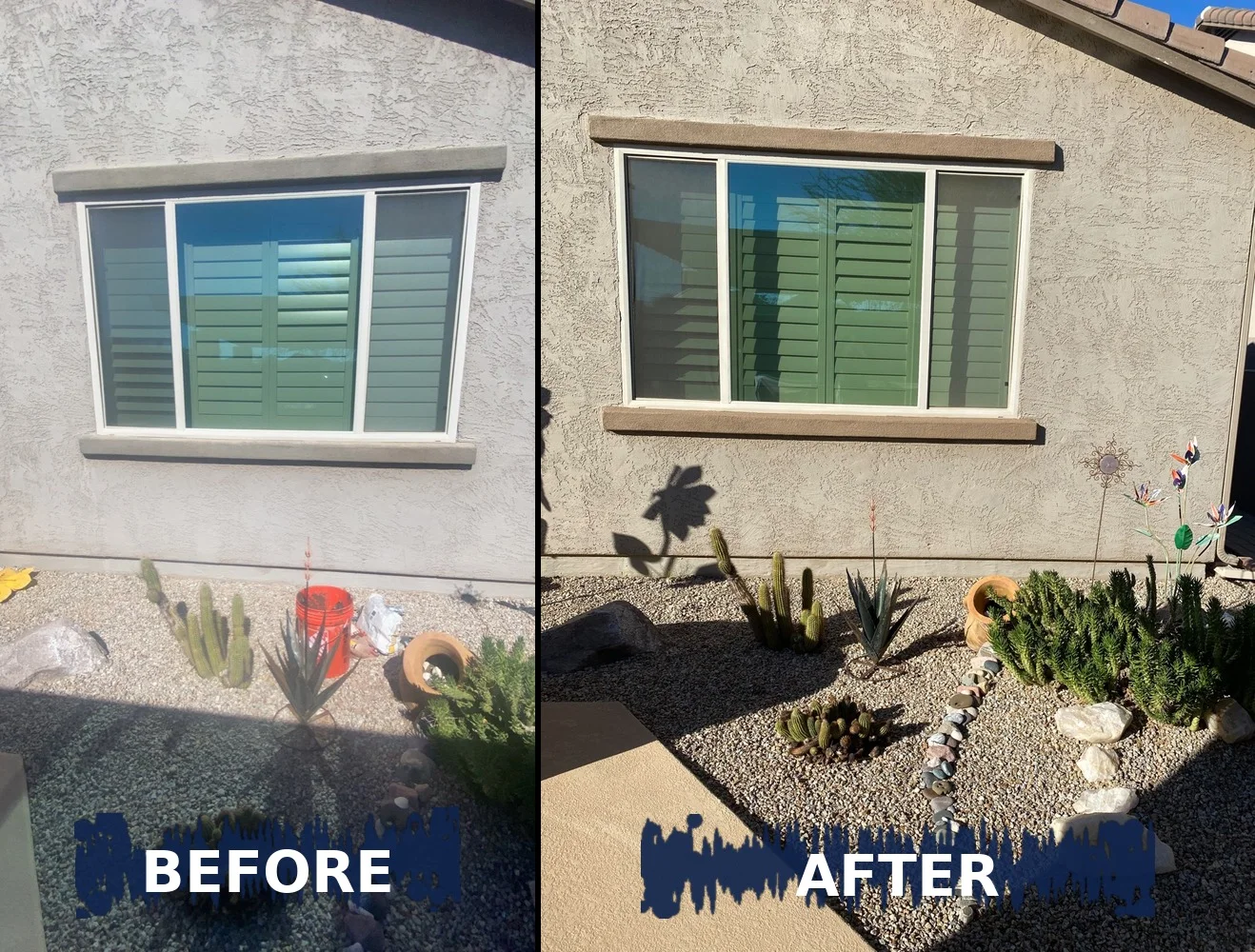
Stucco is the most common exterior wall finish on Phoenix houses, and the desert sun is hard on the paint over it. South- and west-facing walls fade and chalk first, hairline cracks open up around windows and corners, and sprinklers leave stains and efflorescence along the bottom of the wall. A good repaint makes the whole house look newer and helps keep the stucco sealed.
Below is the order I follow when I repaint the stucco walls of a house. Every step says why it matters and which rule is behind it: the EPA lead-safe renovation rule for older homes, OSHA ladder rules, Maricopa County Air Quality Rule 335 for paint VOC content, Phoenix City Code Chapter 32C for keeping wash water and paint out of the storm drain, the 2024 International Residential Code (IRC) for the stucco wall itself and the 2023 National Electrical Code (NEC) for the outdoor electrical you paint around. If you are only freshening up the window surrounds, see my guide to painting exterior window trim on a stucco house; for inside walls, see how to paint a room.
Tools and parts
- Lead test kit (EPA-recognized) for homes built before 1978
- Plastic sheeting or drop cloths for the ground and plants, painter's tape, masking paper and film
- Garden hose with a spray nozzle, soft long-handled brush, bucket and a mild cleaner
- Scraper, wire brush and a sanding sponge
- Stucco patch made for exterior cement plaster, a margin trowel and a texture brush or sponge
- Exterior sealant labeled as meeting ASTM C920 for joints and penetrations, and a caulk gun
- Exterior masonry primer for bare or patched stucco
- 100% acrylic exterior paint for masonry and stucco (check the VOC content on the label)
- Thick-nap roller (3/4 inch or more) with an extension pole, 2 to 3 inch brush, roller tray or 5-gallon bucket with a grid
- Stepladder or extension ladder rated for your weight plus tools, safety glasses, gloves and a hat
Step-by-step
Check the age of the house and test for lead before you scrape
Find out when the house was built. If it is before 1978, test the existing paint with an EPA-recognized lead test kit or send a paint chip to a lab before you scrape, sand or wire-brush anything. If it tests positive, plan to hand-scrape with misting, keep dust contained and consider hiring a lead-safe certified firm.
Why: Housing built before 1978 is what the EPA calls target housing, and the federal RRP rule applies to paid renovation work there unless testing shows the painted parts are lead-free. The rule bans open-flame burning, power sanding or grinding without a shroud and HEPA vacuum, and heat guns at 1,100 degrees F or more. A homeowner working on their own house is not covered by the rule, but exterior paint chips end up in the gravel and soil where kids and pets play, so the same practices protect your family.
Code: 40 CFR 745.103 (target housing: built before 1978) · 40 CFR 745.82(a) (RRP applies to renovations for pay in target housing unless components test lead-free) · 40 CFR 745.85(a)(3) (no open flame, no power sanding without HEPA shroud, heat gun below 1,100 F)
Confirm what permits and approvals you need
Repainting the outside of a house does not need a building permit in Phoenix. Before you buy paint, check your HOA rules for approved colors, and find out whether your home is in a historic district with design-review rules. If the job grows into replacing stucco, windows or wiring, stop and check with the building department.
Why: The Phoenix Building Construction Code lists painting, papering and similar finish work as exempt from a building permit, and the model 2024 IRC does the same. The exemption only covers the permit: the work still has to follow the code, and repairs to the wall system, windows or electrical can need their own permits.
Code: Phoenix PBCC Administrative Provisions Sec. 105.2.1, item 8 (City of Phoenix Work Exempt from Permit guide: painting, papering and similar finish work) · 2024 IRC R105.2 (work exempt from permit; painting and similar finish work)
Pick a stucco paint and primer that meet Maricopa County VOC rules
Use a 100% acrylic exterior paint made for masonry and stucco, flat or low-sheen to hide the texture, and an exterior masonry primer for bare or patched areas. Buy it from a store in the county and check the VOC content on the label or data sheet; low-VOC products are easy to find. Lighter colors absorb less heat, and many HOAs require an approved palette.
Why: Maricopa County Rule 335 makes it illegal to apply an architectural coating in the county that is over the VOC limit for its category. Under the 2013 version of the rule, which the EPA lists as the one in force, flat and non-flat coatings are limited to 250 grams per liter and primers, sealers and undercoaters to 350 g/L. The county already adopted much lower limits (50 g/L flat, 100 g/L non-flat and primers) as a contingency measure, so choosing a low-VOC product keeps you legal either way. Acrylic paint also stays flexible as stucco heats and cools, so it cracks and peels less.
Code: Maricopa County Air Quality Rule 335, Section 301.3 and Table 335-1 (VOC limits for coatings applied in the county) · EPA approval of Rule 335, 90 FR 57370 (Dec. 11, 2025): 2024 limits apply only if contingency measures are triggered; 2013 version remains applicable
Walk every wall and find the problems before you paint
Walk around the house and look closely at each wall. Mark cracks (especially ones running from window and door corners), loose or hollow-sounding stucco, stains under windows and roof scuppers, white crusty efflorescence at the bottom of the wall, and gaps around pipes, vents, hose bibs and light fixtures. Check inside for water stains on the drywall behind any damaged spots.
Why: The code requires the outside wall to be a weather-resistant envelope that keeps water out of the wall and lets water that gets behind the stucco drain back out. Stucco on a house has to be installed to ASTM C926 and C1063 standards. Paint can hide a leak for a season, but it will not fix it; a crack that is letting water in has to be repaired first or the framing behind it can rot.
Code: 2024 IRC R703.1 (exterior walls provide a weather-resistant envelope) · 2024 IRC R703.1.1 (water-resistive barrier and a means of draining water to the exterior) · 2024 IRC R703.7 (exterior plaster per ASTM C926, ASTM C1063 and the code)
Cover the ground, plants and nearby openings
Lay plastic or drop cloths along the base of the wall you are working on, cover plants and gravel next to it, and close the windows and doors on that side. Turn off sprinklers or drip emitters that spray the wall, so it can dry and the fresh paint does not get wet.
Why: For paid exterior work on pre-1978 homes, the EPA rule requires all doors and windows within 20 feet of the work to be closed and the ground to be covered with plastic sheeting extending 10 feet out from the surface being worked on, so paint chips and dust are caught instead of being ground into the yard. It is a good habit on any house because it also keeps drips out of the gravel.
Code: 40 CFR 745.85(a)(2)(ii)(A) (exterior work: close doors and windows within 20 ft) · 40 CFR 745.85(a)(2)(ii)(C) (cover the ground 10 ft beyond the work surface)
Set up ladders safely
Put ladders only on firm, level ground; on gravel, rake a flat spot or use a leveler. Lean an extension ladder at about one foot out for every four feet of height to where it touches the wall, and never stand on the top step of a stepladder. If you cannot reach the top of the wall comfortably from a safe rung, use scaffolding or call a pro.
Why: OSHA's ladder rules apply to employers, not homeowners, but they are the clearest safety standard there is: ladders only on stable, level surfaces, extension ladders set so the base is about one quarter of the working length out from the wall, and the top step of a stepladder never used as a step. Falls from ladders are a common cause of serious injury in home projects.
Code: 29 CFR 1926.1053(b)(5)(i) (non-self-supporting ladders at about a 1:4 angle) · 29 CFR 1926.1053(b)(6) (stable and level surfaces only) · 29 CFR 1926.1053(b)(13) (top step of a stepladder not used as a step)
Wash the walls without sending dirty water to the street
Cover any storm drain or curb inlet near the house. Brush off dust and cobwebs, scrub chalky or stained areas with a mild cleaner and a soft long-handled brush, and rinse with a garden hose. Do not blast stucco with a high-pressure washer. Keep the rinse water in the gravel or landscaping on your own lot, and let the walls dry completely before you patch or paint.
Why: Paint will not stick to the dust and chalk that builds up on Phoenix stucco. Phoenix City Code prohibits releasing anything that is not entirely stormwater into the street, gutter or public storm drain; the short list of allowed releases includes things like landscape irrigation and individual residential car washing, but not paint chips and cleaner washed off a house. High pressure can also force water behind the stucco and into the wall.
Code: Phoenix City Code Sec. 32C-103(B) (no release of non-stormwater to the right-of-way or public storm drain system) · Phoenix City Code Sec. 32C-103(G) (list of allowed non-stormwater releases)
Scrape loose paint and collect the chips
Scrape off paint that is peeling or flaking, feather the edges with a sanding sponge, and wire-brush loose material and efflorescence off the stucco. Collect the chips from the plastic as you go and bag them; do not leave them in the gravel.
Why: New paint is only as good as the paint under it. For pre-1978 homes, the EPA rule restricts high-speed sanding and grinding on painted surfaces unless the tool has a shroud and HEPA vacuum, and requires paint chips and debris to be collected and sealed in a heavy-duty bag without spreading them.
Code: 40 CFR 745.85(a)(3)(ii) (high-speed sanding and grinding restricted without shroud and HEPA) · 40 CFR 745.85(a)(5)(i)(A) (collect paint chips and debris and seal them in a heavy-duty bag)
Patch cracks and seal around penetrations
Open hairline cracks slightly with a scraper and brush out the dust. Fill them with a stucco patch made for exterior cement plaster, press it in and texture it to match the wall, then let it cure for the time on the label before you prime. Cut out old, cracked caulk around pipes, vents, hose bibs and light fixtures and run a neat bead of exterior sealant. Loose, hollow-sounding or missing stucco needs a real plaster repair, not caulk and paint.
Why: The code requires cement plaster to follow ASTM C926 and sets minimum curing times between plaster coats (for example, the finish coat of three-coat plaster no sooner than seven days after the second coat), so painting over a fresh, wet patch can trap moisture and blister. A sealant that meets ASTM C920 stays flexible as the wall heats and cools. Do not seal the bottom edge of metal flashing: the code requires flashing at wall openings and penetrations installed so water drains out of the wall.
Code: 2024 IRC R703.7.2 (cement plaster per ASTM C926) · 2024 IRC R703.7.5 (curing time between plaster coats) · 2024 IRC R703.4 (flashing installed to keep water out of the wall cavity) · ASTM C920 (standard for elastomeric joint sealants)
Keep the weep screed at the bottom of the wall open
Look at the metal or plastic strip where the stucco ends near the ground (the weep screed). Do not paint over its weep holes, caulk its bottom edge or let paint build up there. Pull back rock or dirt that buries it, and do not let the new paint line run down onto a slab or pavers below it.
Why: The code requires a weep screed at the bottom of stucco walls on stud framing, set at least 4 inches above soil or 2 inches above paving, made so water trapped behind the stucco can drain out. Maricopa County's building directive on weep screeds (written for unincorporated county areas) adds that the weep holes must never be covered by concrete, stucco or other material. Blocking it traps water at the bottom plate of the wall.
Code: 2024 IRC R703.7.2.1 (weep screed 4 in. above earth or 2 in. above paving, must let trapped water drain out) · Maricopa County Development Directive DD-5004-01 (unincorporated county: weep screed holes not to be covered)
Mask the meter, outlets, lights and fixtures
Tape plastic over the electric meter, any outdoor disconnect and the panel cover, and do not paint over their labels or open them. Turn off the breaker for outdoor lights and either remove the fixture or mask it. Close the cover on every outdoor outlet and tape around it instead of painting over it. Cover the hose bibs, gas meter, A/C disconnect and the windows on the wall you are painting.
Why: The NEC does not allow internal parts of electrical equipment to be damaged or contaminated by paint, which can cause poor contact and overheating. Outdoor 15 and 20 amp receptacles in a wet location must have a cover that stays weatherproof whether or not something is plugged in, and the hood has to be listed extra-duty; paint can glue that cover open or shut so it no longer seals.
Code: 2023 NEC 110.12(B) (internal parts not contaminated by paint, plaster or other foreign material) · 2023 NEC 406.9(B)(1) (wet-location receptacles weatherproof whether or not a plug is inserted; extra-duty hood)
Prime patches and bare stucco, then roll on two finish coats in the shade
Spot-prime every patch and any bare stucco with an exterior masonry primer. Then cut in along the roofline, trim and corners with a brush and roll each wall with a thick-nap roller, working the paint into the texture and keeping a wet edge from corner to corner. Use two finish coats. Paint in the morning or follow the shade around the house, stay within the temperature range on the label, and do not thin the paint beyond what the label allows.
Why: Fresh stucco patches are alkaline and porous, so primer seals them and keeps the color and sheen even. Paint rolled onto a sun-baked wall dries before it can level and bond, which leaves lap marks and early peeling. Maricopa County's rule also prohibits thinning a coating so that it goes over its VOC limit.
Code: Maricopa County Air Quality Rule 335, Section 305 (no thinning beyond the applicable VOC limit) · Maricopa County Air Quality Rule 335, Table 335-1 (primers, sealers and undercoaters category)
Check that your house numbers are still easy to read
When the paint is dry, pull the masking off your house numbers and look at them from the street. If you painted the wall a new color, make sure the numbers still stand out against it; if they do not, change the numbers or the plaque behind them so firefighters and paramedics can find the house.
Why: The residential code requires approved address numbers visible from the street, at least 4 inches tall with a half-inch stroke, in characters that contrast with their background, and requires that address identification be maintained. A new wall color that matches the numbers can make them disappear.
Code: 2024 IRC R308.1 (address identification: visible from the street, contrasting, at least 4 in. high, maintained)
Clean up brushes, plastic and leftover paint the right way
Rinse water-based brushes and rollers in a utility sink or toilet that drains to the sanitary sewer, never in the yard by the curb or into the gutter. Keep paint cans and trays closed when you are not using them. Mist and fold the plastic dirty side in, bag it with the chips, and keep leftover paint for touch-ups or take it to a household hazardous waste collection.
Why: Paint rinse water in the street or gutter is a release of non-stormwater to the public storm drain, which Phoenix City Code prohibits. Maricopa County's paint rule requires coating containers, including trays and buckets, to be closed when not in use. For paid work on pre-1978 homes, the EPA rule requires the plastic to be misted, folded dirty side inward and sealed as waste.
Code: Phoenix City Code Sec. 32C-103(B) (no release of non-stormwater to the public storm drain system) · Maricopa County Air Quality Rule 335, Section 306 (painting practices: containers closed when not in use) · 40 CFR 745.85(a)(5)(i)(B) (mist, fold dirty side in and seal protective sheeting)
When to stop and call a licensed pro
- The house was built before 1978 and the paint tests positive for lead, or large areas are peeling.
- Cracks run from window and door corners, stucco sounds hollow or is coming off, or there are water stains inside. That points to a water or flashing problem that has to be fixed before paint.
- The walls are two stories tall, over a slope or above a roof, where you would need an extension ladder or scaffolding.
- Outdoor outlets, lights or the meter area are loose, cracked or missing their covers.
- Your HOA requires an approved color or a licensed contractor, or you want the whole house sprayed and back-rolled in a day or two with clean lines.
Common questions
Do I need a permit to paint the outside of my house in Phoenix?
No building permit is needed just to paint. The Phoenix Building Construction Code lists painting and similar finish work as exempt from a permit. Check your HOA for color approval, and check with the city if the house is in a historic district or the job includes stucco, window or electrical repairs.
Can I pressure wash stucco before painting?
Use a garden hose with a soft brush and a mild cleaner instead. High pressure can drive water behind the stucco and damage the texture, and in Phoenix the wash water cannot be sent into the street or a storm drain.
Should I use elastomeric paint on stucco?
Elastomeric coatings are thicker and more flexible and can bridge fine hairline cracks, but they need a clean, sound surface and the right primer, and they can trap moisture in a wall that is already wet. A quality 100% acrylic masonry paint is the usual choice for a repaint; follow the manufacturer's data sheet for whichever you choose.
How long should I wait to paint a stucco patch?
Follow the cure time on the patch product, and longer in cool or damp weather. Fresh cement patches are alkaline; painting too soon can cause blistering or a dull, blotchy spot. A masonry primer over the cured patch helps the finish look even.
What time of day is best to paint stucco in Phoenix?
Early morning, on the side of the house that is in the shade. A sun-baked wall can be much hotter than the air, so check the surface temperature range on the paint label and follow the shade around the house.
Want it done right the first time?
I repaint stucco houses, block walls, trim and doors across Phoenix, including the washing, crack repair and masking before the paint. See my Exterior house painting in Phoenix, or send a request with the contact form and text me a photo for a fast estimate.
Licensed Phoenix, Arizona General Contractor ROC 367058 (R-62)